These are the venomous species Darren comes across around Esperance and the surrounding farms. Every one of them gets caught and released well away from the house — none of them get killed.
Colour varies enormously within a single species, and juveniles often look nothing like their parents. Treat every snake you find as dangerous, keep people and pets well back, and ring 0404 387 215 any hour.
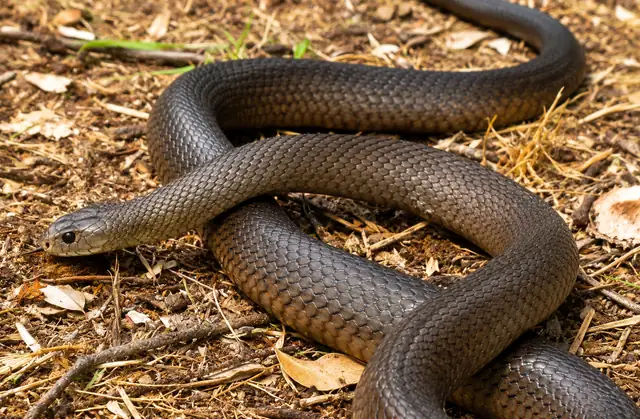
Dugite
Pseudonaja affinis
The largest venomous snake in the region, reaching 2m though usually nearer 1.5m. Long and slender with a head barely wider than the neck, in olive, grey or brown. It has done well out of settlement — house mice draw it to sheds, chook pens and rubbish piles, and it shelters under tin, slabs and in rodent burrows.
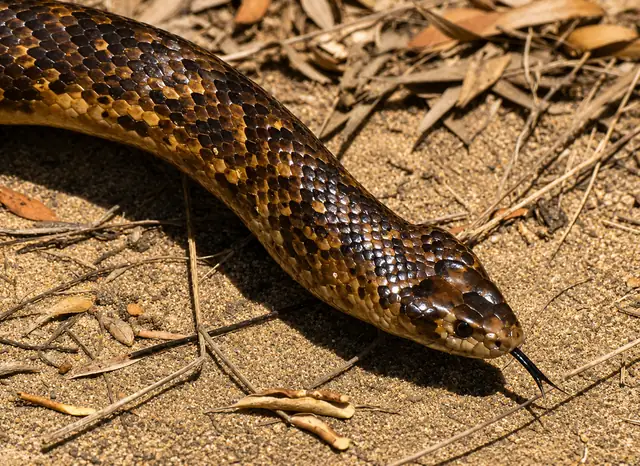
Spotty Dugite
Pseudonaja affinis
The same species, just a different colour form — heavily flecked and blotched with dark scales over a tan base. Brown snakes vary so widely that colour alone is close to useless for telling them apart. Head shape and build are the giveaways.
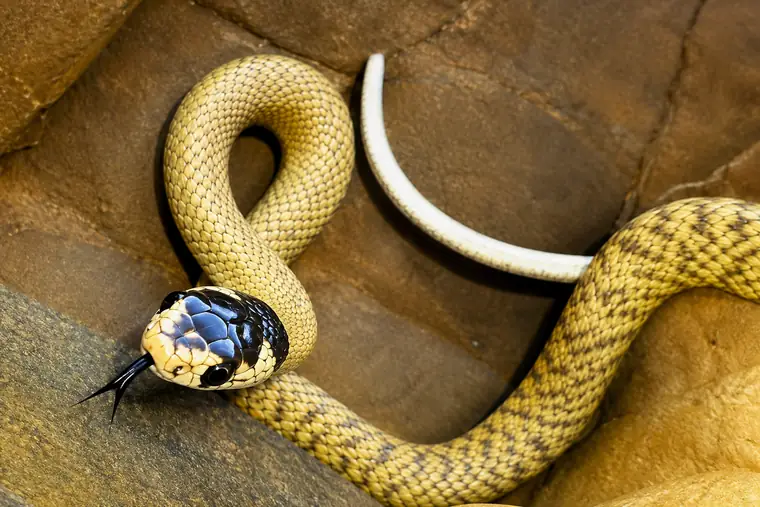
Juvenile Dugite
Pseudonaja affinis
Young dugites look nothing like their parents — a dark cap on the head and a separate black band across the neck, on a much paler body. They hatch at around 20cm from clutches that can top twenty eggs, so late summer and autumn is when the small ones start appearing. Venomous from day one.
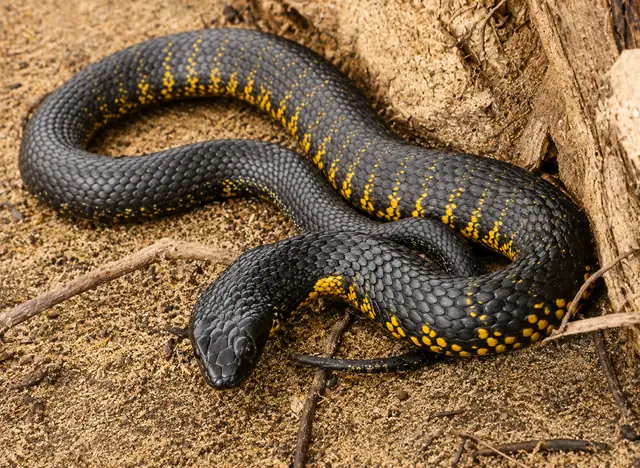
Tiger Snake
Notechis scutatus
Thickset and often banded black and yellow, though the banding can be faint or missing altogether. Around Esperance it keeps to low-lying swampy country, dam banks, drains and long grass near water, where it hunts frogs. Highly venomous.
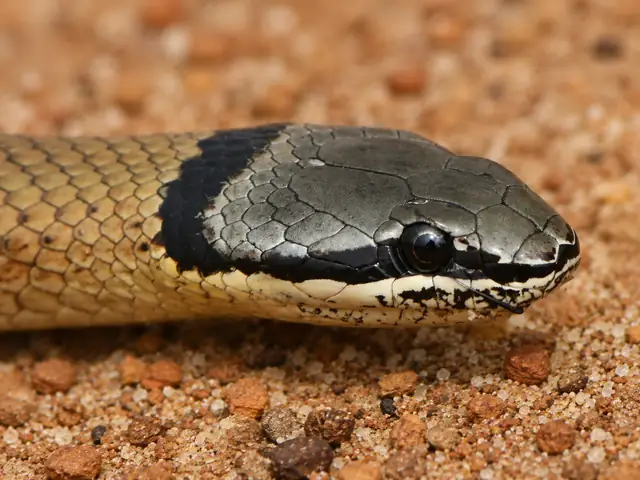
Western Crowned Snake
Elapognathus coronatus
Found only in the south-west, including the islands of the Recherche Archipelago. A common but rarely noticed snake under 700mm, marked with a dark band across the back of the head. Lives in woodland, swamp margins and heath, feeding mainly on small frogs and skinks.
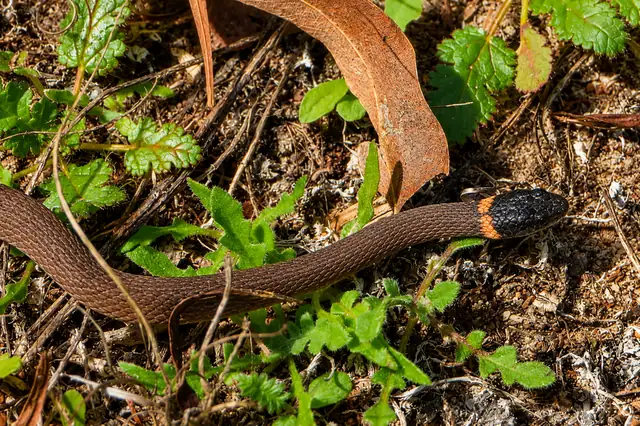
Masters Snake
Drysdalia mastersii
A small snake averaging around 40cm — brown to dark grey with a black head, a pale collar across the nape and a white stripe running from the lip back along the neck. Esperance sits at the western edge of its range, which runs east from here across to South Australia and western Victoria.
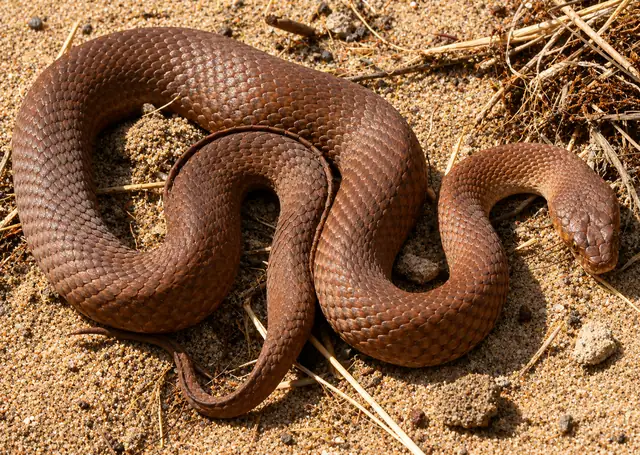
Bardick
Echiopsis curta
Rare in the eastern states but reasonably common around Esperance, though nocturnal and seldom seen. Short and heavy-bodied to about 70cm, grey to rufous brown, with a broad head and white scales around the lips. It ambushes rather than flees — it will sit motionless while you walk up on it. Often mistaken for a death adder, and its venom is death-adder-like.
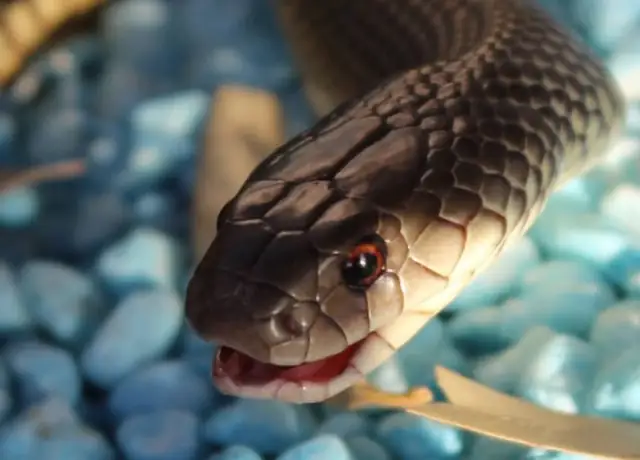
King Brown / Mulga Snake
Pseudechis australis
Despite the name it isn't a brown snake at all — it belongs to the black snake group, which matters a great deal in hospital because it changes which antivenom is used. A big, heavy animal with a broad flat head and coppery to dark brown scales, each with a darker edge and paler centre. It delivers one of the largest venom yields of any Australian snake.
Photographs by Darren Darch.